
When a major storm hits, every single outage feels urgent.
That’s why triage is so essential. Emergency medicine uses triage to determine which patients need treatment most urgently. Utilities use a similar discipline to decide which restoration work should happen first, based on customer safety, system impact, and available resources, as EEI outlines in their guidelines for emergency response.
Restoration priority is more complicated than “first come, first served”
Public safety comes first; dangerous conditions require immediate attention. Critical facilities also affect priorities, including hospitals, water and wastewater facilities, communications infrastructure and other locally designated essential facilities. Entergy outlines these priorities well in explaining their restoration strategy.
Then comes the broader restoration impact. Is one customer out, or hundreds? Is a substation or transformer involved? Is another outage nested within a larger problem? What crews are available, where are they located, and what qualifications do they have?
“With large weather events, it’s not as easy as a one, two, three, four, five,” explains Peter Ashley, a senior delivery principal at Slalom. “These are complex issues with a variety of factors that need to be taken into account.”
That complexity is important to recognize because restoration is not simply a first-come, first-served process. Priorities will change as new information arrives.
Surge should bring more rigor, not a different playbook
When an emergency room is overwhelmed, doctors and nurses take whatever safe, creative approach they can to see as many patients as quickly as possible. But they fall back on fundamental processes of examination and diagnosis regardless of how crowded the waiting room may become.
When an outage event escalates, utilities may activate emergency operations centers, call in additional crews, and increase the frequency of communication. But just like emergency medicine, the fundamentals remain critical. The operating tempo changes; the underlying process should not.
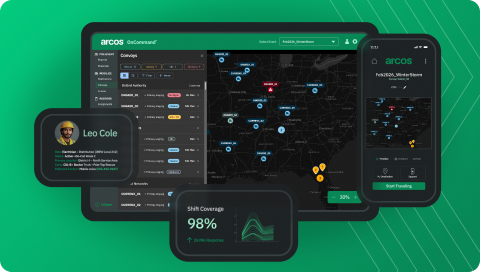
A real-world example comes from Central Georgia EMC. During an all-hands storm callout, more than 80% of its workforce responded within two minutes using automated callout. John Harkness, then senior vice president of Distribution Services, said the previous manual process could have taken up to an hour; the co-op attributed a 30–45-minute improvement in restoration time to the faster callout. A single powerful process, optimized for results, and able to scale to meet the need.
Extreme weather remains a significant resilience challenge for utilities. That makes the ability to scale without abandoning familiar processes even more important.
Customers see the outage, not the triage
Nearly every step of your response process affects customer perception and experience. If a patient waiting for treatment in an ER notices other patients going back, or doctors leaving en masse due to a shift change, they will start to wonder when they’ll be seen, and what could be causing the delay.
A utility customer may see crews working elsewhere while their own power remains out. They may see a school with power and wonder why their neighborhood has not been restored. A rural customer may be unaware that distance, access or crew availability is affecting response time.
That creates an important role for communication, which should go beyond just publishing an ETR (estimated time of restoration). Communications should help customers understand what is happening, while conveying that restoration work is actively moving forward. With data from the field more quickly, even the ETRs can become more accurate and helpful.
Utilities cannot restore every customer simultaneously. They can, however, create a process that makes priorities clear, scales under pressure, and gives leaders the visibility they need to continually adjust where crews and resources are deployed.
When everything is urgent, clarity becomes an operational requirement.